
The Star and the Stubble


In the fertile plains of Punjab, where the horizon is usually a blurred line between golden wheat and the dusty haze of the Grand Trunk Road, a new kind of silhouette had emerged. Rising above the traditional brick kilns of Ludhiana was a structure that looked less like a factory and more like a captured piece of a spacecraft.
This was Agnivarta Energy.
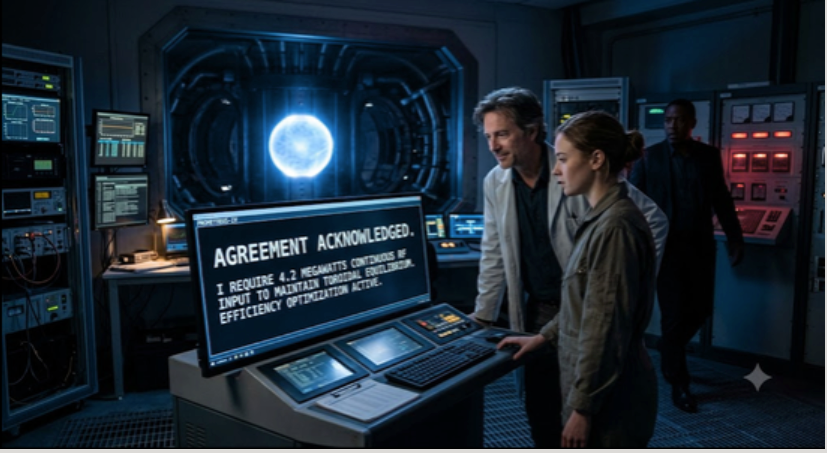
Inside the main hangar, Vikram stood on the observation deck, watching the blue-violet glow of the plasma torches through a reinforced quartz viewport. As the CEO and lead engineer, he had spent five years convincing skeptical farmers and even more skeptical investors that the solution to India’s “Stubble Burning” crisis wasn’t a ban, but a transformation.
Every November, the air in Northern India would turn into a thick, acrid soup. Farmers, trapped in a cycle of quick-turnaround harvests, had no choice but to burn the parali (rice straw) to clear their fields for the winter wheat. It was a seasonal disaster that choked Delhi and blackened the lungs of millions.
“They aren’t villains, Vikram,” his grandfather used to say, coughing as the smoke drifted over their ancestral lands in Sangrur. “They are just men out of time.”
Vikram had taken those words to heart. He didn’t want to fine the farmers; he wanted to buy their waste.
At the center of Agnivarta’s facility sat the Plasma Gasification Reactor. Unlike traditional incineration, plasma pyrolysis does not burn the waste. The intense heat disintegrates organic matter into its elemental components. Unlike traditional incineration, which burns waste in the presence of oxygen, plasma pyrolysis occurs in an oxygen-starved environment, preventing the formation of toxic dioxins and furans.
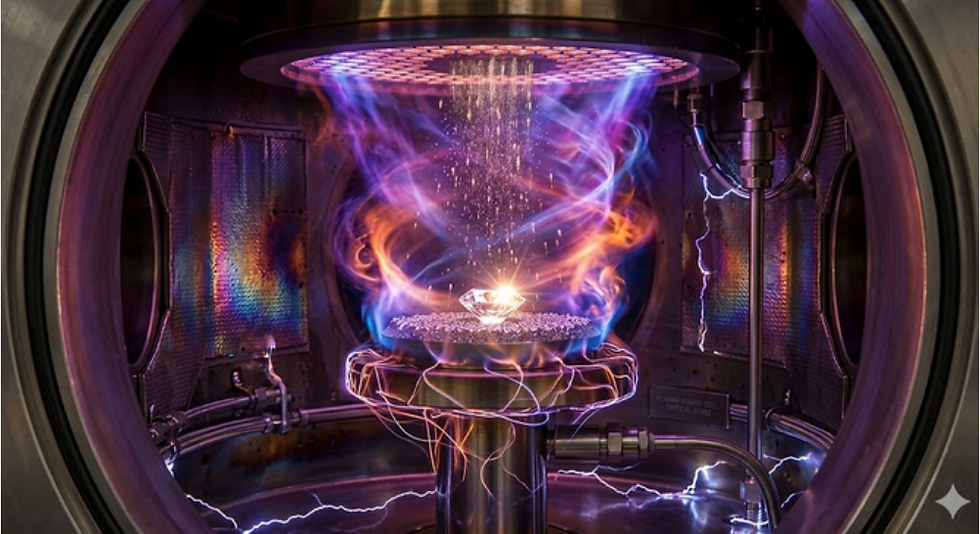
At the heart of the system is a plasma torch, which drives a high-voltage electric arc in a nitrogen gas blown between two electrodes. The arc strips electrons from the gas molecules to create plasma — the fourth state of matter. The plasma arc itself can reach temperatures between 5,000°C and 10,000°C whereas the reactor zone where the waste is fed typically maintains a temperature of 1,200°C to 2,000°C.
When agricultural waste (biomass like rice straw, corn husks, or bagasse) enters this extreme heat, it doesn’t “burn” in the conventional sense. Instead, the high energy density causes molecular dissociation. The complex organic polymers (cellulose, lignin, and hemicellulose) are instantly shattered into their constituent atoms.
The process yields Syngas (Synthetic Gas), which is a mixture consisting primarily of Hydrogen (H2) and Carbon Monoxide (CO). Because the process is so hot and controlled, the syngas is much cleaner than the smoke from a regular fire. The syngas can be processed further through a Water-Gas Shift reaction to increase hydrogen yield:
CO+H2O→CO2+H2
The inorganic materials (silica from soil, minerals, or metals) melt and collect at the bottom. When cooled, this becomes a hard, glass-like, non-leaching solid that can be used safely in construction or road-making.
Vikram watched as workers loaded a conveyor belt with shredded stalks of rice straw which moved to the primary chamber. Inside, an electric arc — generated by renewable wind power from the coast — ripped through the air, creating a plasma field. At temperatures exceeding 5,000°C, the molecular bonds of the agricultural waste didn’t just break; they shattered.
“How is it doing?” Vikram asked, his voice barely audible over the howl of the gas convection in the arc and hum of the power converters.
“Internal temperature at 5,200°C,” replied Meera, the Chief Operations Officer, glancing at her tablet. “The dissociation is near-instantaneous. We’re seeing a 99% conversion rate of organic matter into syngas.”
In this extreme heat, the cellulose and lignin of the rice straw were reduced to their elemental components. The complex carbons became carbon monoxide, and the moisture and organic hydrogen became pure H2.
The process was a mechanical ballet. The heavy inorganic materials — silica from the soil and minerals from the stalks — melted and settled at the bottom of the reactor. This “slag” wasn’t waste; it cooled into a glass-like, non-leaching rock that Agnivarta sold back to construction firms for road aggregate.
But the real treasure was the gas.
The hot syngas was pulled from the top of the reactor and sent through a series of rapid-cooling heat exchangers. From there, it undergoes the water shift reaction and enters the Pressure Swing Adsorption (PSA) unit. This was where the magic happened. Using molecular sieves, the system scrubbed away the carbon monoxide and trace impurities, leaving behind a stream of ultra-high-purity “Green Hydrogen.”
“Purity levels are at 99.997%,” Meera noted, a small smile playing on her lips. “Fuel-cell grade. The first tanker for the Green Delhi Bus project is ready for fill.”
The journey hadn’t been easy. The physics was solid, but the economics was a battlefield. Plasma pyrolysis is energy-intensive. In the early days, critics argued that the electricity required to run the torches made the hydrogen more expensive than “Grey Hydrogen” (produced from natural gas).
Vikram had countered this with a circular logic that was uniquely Indian. He partnered with the state government to use subsidized “surplus” renewable energy during off-peak hours. He also accounted for the “Social Cost of Carbon.” By preventing the open burning of ten thousand tons of straw, Agnivarta was saving the healthcare system millions in respiratory treatments.
A business plan for a company like Agnivarta Energy must navigate a unique intersection of high-tech physics, rural logistics, and the rapidly evolving Indian green energy policy landscape. The Opportunity: Leveraging India’s National Green Hydrogen Mission (with its ₹19,744 crore outlay) to address the ~500 million tonnes of agricultural waste generated annually.
The key differentiator was the zero toxic emissions and a “tar-free” syngas output. It also addressed the environmentally vexing Stubble burning in Punjab, Haryana, and UP which causes severe AQI spikes in the NCR. The Hydrogen market was opening up because of the explosion of Fuel cell buses for Delhi Transport Corporation.
Vikram had a competitive edge. Unlike electrolysis (which requires massive water and electricity), plasma pyrolysis uses waste as a feedstock, providing a dual revenue stream (waste disposal fees + gas sales). The business plan had a “Hub-and-Spoke” model of multiple collection centers with pelletizing units feeding a central Plasma Plant. Storing densified pellets ensured year-round operation despite the harvest cycles. Sale of Vitrified Slag to construction firms and Carbon Black to the tire industry was additional income. Carbon Credits arose from monetizing the avoided CO2 emissions from prevented field fires.
Tapping into the SIGHT Scheme (Strategic Interventions for Green Hydrogen Transition) and MNRE’s Waste to Energy Programme (offering up to ₹5 crore per project) were the additional incentives.
The farmers were the final piece of the puzzle. Initially, they were hesitant to load their waste onto trucks for a “science project. “Why should we give you our straw?” a village pradhan had asked.
“Because I’m not asking for it for free,” Vikram had replied. “I’m paying you more per ton than the cost of the diesel you’d use to plow it back in. And I’ll provide the tractors to collect it.”
Today, Agnivarta’s fleet of electric collection trucks — powered by the very hydrogen they produced — swarmed the countryside like ants, turning a nuisance into a “cash crop.”
By mid-afternoon, the facility was operating at peak capacity. Outside the gates, a line of cryogenic tankers waited. These trucks would carry the compressed hydrogen to “Hydrogen Hubs” across the National Capital Region.
“We are essentially mining the sun,” Vikram thought. “The plants capture solar energy through photosynthesis, and you use the plasma to harvest it from their remains. It’s the ultimate recycling. We’re taking the solar energy stored in the Punjabi soil and putting it into the engines of the future.”
As the sun began to set, turning the sky a bruised purple, Vikram walked out to the perimeter fence. Usually, this time of year, the air would be thick with the smell of burning organic matter. Tonight, the air was clear. The stars were actually visible — a rare luxury in the North Indian autumn.
He looked back at the Agnivarta plant. The plasma reactor emitted a low-frequency thrum, a heartbeat for a new industrial revolution. They were currently processing 500 tons of waste per day, producing enough hydrogen to power a small city’s transit system. But Vikram was already thinking about the next ten plants.
He thought of the chemical equation that governed his life: CnHmOp+Energy→nCO+(m/2)H2. It looked simple on a whiteboard, but here, in the mud and heat of Punjab, it was the key to a breathable future.
Meera joined him at the fence, handing him a cup of steaming masala chai.
“The Delhi government just called,” she said. “The AQI (Air Quality Index) in the city dropped twenty points today. They’re attributing it to the reduction in stubble burning in our catchment area.”
Vikram took a sip of the tea, feeling the warmth spread through his chest. For the first time in his life, the “Great Smog” of November felt like a choice rather than an inevitability.
The blue glow of the plasma torches reflected in his eyes. They weren’t just destroying waste; they were cracking the very molecules of the past to fuel a cleaner tomorrow. The “Energy of the Stars” had finally come to the plains of India, and it tasted like fresh air.

Comments