
The Angora Bond


In the mist-shrouded peaks of the Kulu Valley, where the air smells of cedar and ancient snow, a revolution was brewing — not of swords, but of silk-soft fiber.
For generations, the weavers of Himachal Pradesh had a love-hate relationship with Angora wool. It was the warmest substance known to them, a thermal miracle capable of trapping heat in the most brutal Himalayan winters. But Angora had a flaw: it was too perfect.
Under a microscope, the fibers were as smooth as glass. Unlike sheep’s wool, which has microscopic scales that “hook” together during spinning, Angora fibers would simply slide past one another. Spinning them into long, durable threads was like trying to braid water. The “Ghost Thread,” as the locals called it, would often snap or fray, limiting its use to small, delicate blends.
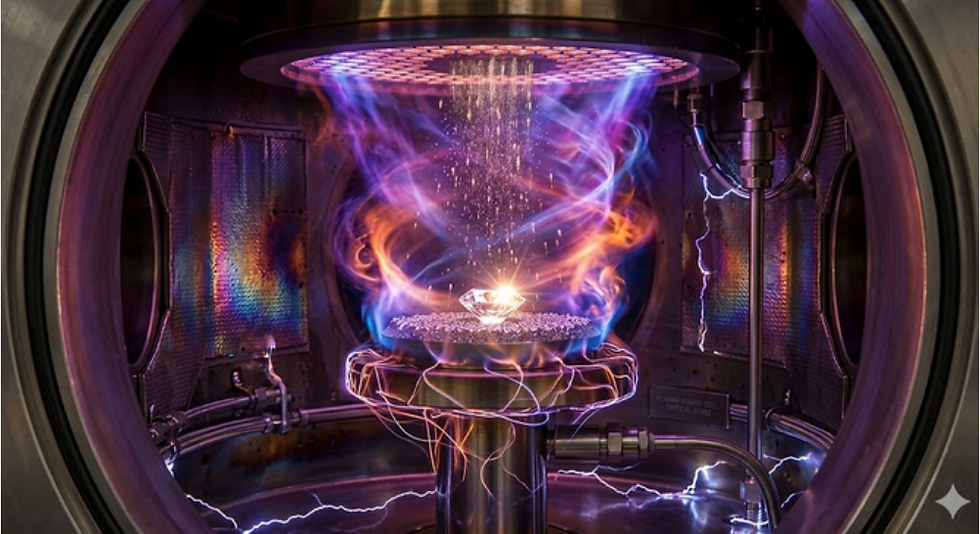
Everything changed when the Wool Research Board arrived with a sleek, humming monolith of steel and glass. They set up the first-scale Atmospheric Pressure Dielectric Barrier Discharge (AP-DBD) reactor right in the heart of the valley.
While it sounded like science fiction, the principle was a masterstroke of physics. Traditional plasma treatment often required expensive vacuum chambers or harsh chemicals that “etched” and damaged the delicate protein structure of the wool. This new system was different. It produced large-area, Helium-free cold plasma right in the open mountain air.
Kavita, a master spinner whose family had worked the charkha for a century, watched the first batch go through. Continuous streams of raw Angora fiber were fed into the reactor.
As the wool passed through the violet glow of the cold plasma, the plasma didn’t “eat” the fiber. Instead, it bombarded the surface with ions and excited molecules. It created a microscopic “nano-roughness” — a series of functional groups and textures that acted like invisible Velcro. The fibers emerged looking identical to the naked eye, but their physical personality had shifted.
“It feels the same,” Kavita whispered, rubbing the wool against her cheek, “but it behaves… differently.”
When Kavita sat at her wheel, the magic happened. The “Ghost Thread” was gone. The textured Angora fibers gripped each other with newfound tenacity. She was able to spin a thread thinner and stronger than she had ever dreamed — a continuous, shimmering line of pure warmth that didn’t slip or break.
The Kulu Valley reactor turned the “impossible” into the “industrial.” Soon, the valley wasn’t just known for its beauty, but for producing the world’s first 100% pure Angora yarn that could survive a high-speed loom.
Today, the hum of the plasma reactor blends with the rush of the Beas River. The partnership between high-tech physics and Himalayan tradition has created a garment that is light as a cloud but holds the heat of a hearth fire. In the Kulu Valley, the future of fashion isn’t just being woven; it’s being ionized.
The arrival of the reactor didn’t just change the fiber; it changed the rhythm of the village squares. Initially, the local farmers — the Angora Wallahs — were skeptical. They stood at the edge of the Research Board’s perimeter, clutching their wicker baskets of raw, white fluff, watching the violet light of the AP-DBD system with narrowed eyes.
Jishnu, the eldest farmer in the valley, was the first to speak up. He had raised Angora rabbits for sixty years, grooming them with wooden combs and protecting them from leopards.
“You are putting lightning into the wool,” Jishnu remarked, pointing a gnarled finger at the glowing electrodes. “Wool is a living thing. You burn the life out of it with your machines, and it will lose its spirit. It won’t keep the mountain chill out anymore.”
The lead researcher, Dr. Nirmal Gupta, didn’t argue. Instead, he invited Jishnu to bring a single kilo of his finest “Grade A” clip.
The farmers gathered around as Jishnu’s wool was fed into the continuous stream. They expected the smell of singed hair or the crackle of fire. Instead, there was only a low, rhythmic hum.
When the wool emerged from the plasma field, Dr. Aris handed a tuft back to Jishnu. The old man pressed it to his lips — the traditional way to test for heat retention. His eyes widened. It wasn’t brittle. It wasn’t burnt. It was just as soft, but it felt… “tackier,” like the skin of a ripened peach.
“We aren’t adding chemicals, Jishnu,” Dr. Gupta explained. “And we aren’t using Helium, which would make the process too expensive for the valley. We are just using the air you breathe to rearrange the surface of the hair at a level smaller than a speck of dust.”
Word spread from the Kulu reactor to the high-altitude farms. Before the plasma system, the farmers were at the mercy of middlemen who bought their wool cheap, claiming it was “unspinnable” without being blended with 70% sheep’s wool or synthetic polyester.
Now, the interaction changed. Farmers began bringing their clips directly to the Kulu facility. Because the plasma treatment allowed for 100% Angora yarn, the value of their raw product tripled. The Wool Research Board helped the farmers form a collective. They weren’t just “rabbit raisers” anymore; they were the suppliers for a high-tech “plasma-certified” luxury line.
A month later, the first shawls made from the plasma-textured yarn were finished. Jishnu sat outside his hut as the sun dipped below the peaks. He wore a waistcoat made from his own rabbits’ wool — spun into a long, continuous thread that had been impossible only a year prior.
A group of younger farmers sat with him, debating the merits of “Dielectric Barrier” settings versus traditional methods. Jishnu just smiled, feeling the immense warmth trapped in the fibers.
“The machine doesn’t steal the spirit,” Jishnu told the younger men, “it just gives the wool hands so it can hold onto itself.”
The Kulu Valley had found the perfect balance: the ancient warmth of the Angora, perfected by a gentle stroke of “cold lightning.” The textured angora could be spun with other types of wool making more products possible.
The introduction of plasma-textured Angora didn’t just revolutionize pure yarn; it acted as a “molecular bridge” for the entire wool industry in the Kulu Valley. By changing the surface energy of the Angora, it could now bond with fibers that were previously its rivals or total strangers.
The Hybrid Revolution
In the bustling sorting rooms of the Kulu facility, the air was filled with a new kind of experimentation. Farmers who previously only traded in coarse sheep wool began bringing their clips to be blended with the “activated” Angora.
Before the plasma reactor, mixing Angora and Pashmina was a nightmare. Both fibers were too smooth, resulting in a yarn that would literally fall apart on the loom. By running the Angora through the AP-DBD reactor first, it developed the necessary “grip” to hold onto the even finer Pashmina fibers. A fabric so light it could pass through a wedding ring, yet warmer than a heavy winter coat. They called it Kulu Silk.
The local Desi sheep wool was famous for its durability but infamous for being “scratchy” against the skin. When the textured Angora was spun with the coarse local wool, the Angora fibers wrapped around the sheep wool like a soft, thermal sheath. This created a hybrid yarn perfect for high-end upholstery and heavy-duty outdoor gear that felt like cashmere on the inside but wore like iron on the outside. With these new hybrid yarns, the “Wool Research Board” and the farmers’ cooperatives began prototyping products that had never been seen in the valley:
Utilizing the moisture-wicking properties of sheep wool and the extreme heat retention of Angora, they developed Thermal Performance Wear layers for Himalayan trekkers. A blend of plasma-treated Angora and a small percentage of local hemp fiber. The Angora provided the comfort, while the textured surface allowed it to lock tightly with the hemp for a sock that would never lose its shape or wear through at the heel. Because the plasma treatment increased the surface energy, the wool could now be bonded with eco-friendly bioplastics to create biodegradable insulation for high-altitude housing.
The interaction between the farmers shifted from simple harvesting to material engineering.
Jishnu and the younger farmers began “recipe-sharing.” A farmer with a smaller rabbitry might partner with a neighbor who had a large flock of sheep. Together, they would bring their raw materials to the reactor, select a specific “Surface Texture Profile” on the machine’s interface, and create a custom blend unique to their village.
“We aren’t just selling bags of fluff anymore,” Jishnu noted, watching a shipment of Angora-Yak hair blend being packed for a boutique in Milan. “We are selling the science of the blend.”
The Kulu Valley had transformed into a living laboratory where the Atmospheric Cold Plasma served as the invisible glue, holding together not just different fibers, but the economic future of the mountain communities.


Comments