
Healing the Hospitals


Dr. Sastri, head of the Department of Scientific & Industrial Research, sat watching the grainy CNN footage on his television, his forehead creased with concern. The European headlines were absolutely devastating. Medical waste by the thousands of tons — bloodied bandages, contaminated needles, and discarded organs — was being smuggled across borders like some kind of toxic black market currency. The health crisis had grown so severe that France’s health minister was forced to step down. This was 1988.
If Europe was drowning in medical waste, Sastri realized India was already completely underwater.
The real nightmare wasn’t just the sheer volume of waste — it was what happened after disposal. Behind local hospitals, these weren’t urban legends but actual business operations. Scavengers were collecting quilts packed with used surgical cotton, while contaminated syringes got cleaned and resold to clinics for pocket change.
Action was desperately needed. Sastri picked up the phone and called his colleague Swapan to brainstorm solutions.
Days later, hundreds of miles away in Gandhinagar’s quiet research centre, the corridors carried the distinct scent of ozone and machinery. Dr. Jayan was huddled in discussion with colleagues Prasad and Nirmal.
“DSIR just called,” Jayan announced, cutting through the quiet. “They’re asking whether plasma torch technology could eliminate medical waste.”
Nirmal grimaced at the technical complexity ahead. “We’re talking high volume, low density materials with completely inconsistent composition. Plastics mixed with organic matter and liquids — it’s an absolute nightmare scenario.” Jayan pushed back: “But wouldn’t a thermal plasma plume work regardless of waste type? That could actually be our advantage.”
The technical hurdles remained daunting. When TIFAC (Technology Information Forecasting and Assessment Council) formally greenlit the project in the late 90s, their objective was crystal clear. They weren’t seeking an improved incinerator — they wanted complete molecular destruction.
“Traditional incineration just relocates toxins from soil to atmosphere,” Nirmal explained during one of their marathon late-night design sessions. “Burn PVC and you create dioxins. Dioxins cause cancer. We need to achieve extreme temperatures.”
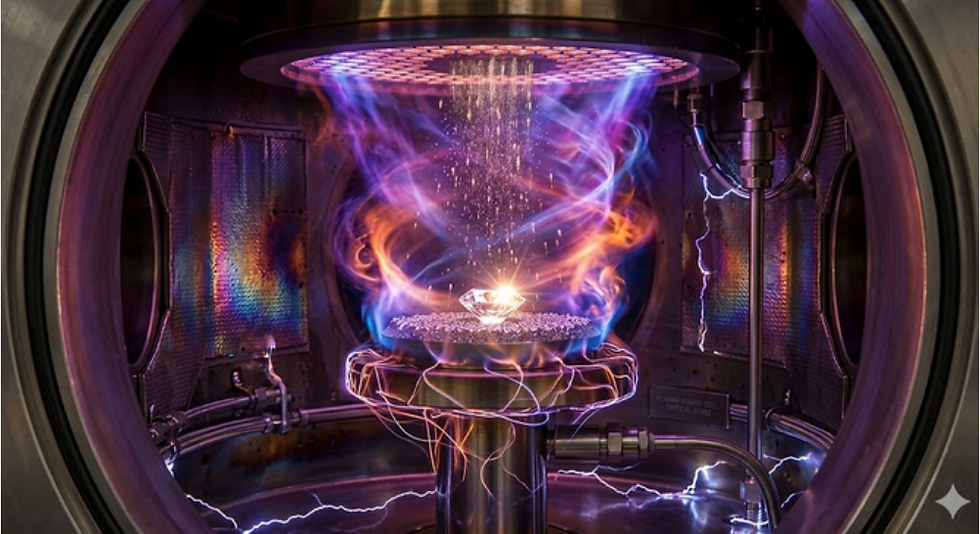
Their solution was the Plasma Torch. This 1960s space program leftover had originally been engineered to replicate the extreme heat experienced by missiles reentering Earth’s atmosphere, generating temperatures reaching tens of thousands of degrees.
Their target was pyrolysis — thermal breakdown in oxygen-depleted conditions. The team relocated to their laboratory. The work proved exhausting. Beyond managing extreme heat, they were wrestling with highly corrosive environments and explosive gas byproducts like carbon monoxide and hydrogen from the pyrolysis process. Adding to the complexity, waste composition varied wildly from plastic bags one day to liquid laboratory runoff the next.
Initial experiments used a Sub-stoichiometric Plasma Incinerator. They mounted a plasma torch with thermionic tungsten cathode and forced nitrogen flow through a side port at the reactor bottom, complete with induced draft fan and chimney for burning residual gases. After preliminary testing at the lab, this system was installed at Gujarat Cancer Research Hospital in Ahmedabad for real-world trials. Operating in semi-pyrolysis mode at GCRI, the operation, including pathogen elimination results, was flawless.
A chance encounter with a Westinghouse engineer sparked their next breakthrough. Mark 2 was engineered for full pyrolysis operation, where plasma converts waste into carbon monoxide, hydrogen, methane, and ethane. It featured a secondary chamber with an igniter and burner for combusting the pyrolysis gases. Installation took place at an Ahmedabad industrial facility.
They successfully met CPCB (Central Pollution Control Board) requirements of 1200°C gas temperature in the secondary chamber without additional heating systems. CPCB standards were satisfied with gas residence time in the burn column exceeding 1–2 seconds.
“This torch consumes nitrogen like crazy,” Dr. Prasad observed, eyeing the rows of nitrogen cylinders. “A 50-bed hospital could never afford the operating costs.”
The team pivoted to developing a graphite electrode plasma torch that operates on air without requiring electrode cooling, eliminating heat loss. Additionally, plasma could be initiated without gas flow. The graphite plasma torch creates a non-transferred arc. Spectroscopic analysis revealed temperatures ranging from 20,000°K in the plasma core down to 3,000°K in the outer plume. At elevated temperatures exceeding 1000°C, super thermal pyrolysis occurs, delivering exceptional solid-to-gas conversion efficiency.
The project’s breakthrough moment came during a site visit when Dr. Jayan observed the swirling gases generated by the waste itself. “Why search for external gas sources?” he wondered aloud. “Why not create a torch that feeds on its own combustion?”
This insight led to the Endogenous Gas Feed innovation. By filtering and recycling 10% of the waste’s own pyrolyzed gases back into the system, the machine achieved self-sufficiency. Their “dragon” was literally breathing its own fire to sustain operation.
In this refined design, the torch initiates without external gas feed. Pyrolysis generates abundant combustible gases. An inline suction pump captures product gas and filters out soot particles before feeding it back to the plasma torch. They successfully recycled 10% of pyrolyzed gases while maintaining plasma torch stability. The entire plasma torch operation became automated through sophisticated instrumentation. The innovation earned them a patent.
By 2000, their first commercial prototype was operational at Goa Medical College. A young, astute Chief Minister named Manohar Parrikar toured the facility. He watched infectious waste bags enter the machine and emerge as small, glass-like, completely inert “slag” — a silico-metallic solid safe enough to handle barehanded.
“Outstanding engineering,” Parrikar commented. The team felt victorious.
However, the real “pathogens” weren’t lurking in medical waste — they were entrenched in corporate boardrooms. For the following decade, the “Incinerator Lobby” systematically opposed Plasma Pyrolysis technology. Regulations faced delays; skepticism was deliberately cultivated. Established companies resisted any machine that destroyed waste so thoroughly it eliminated secondary market opportunities.
“Mastering plasma physics turns out to be simpler than navigating government regulatory bureaucracy,” Prasad reflected during those challenging years.
Everything shifted in 2016. With waste management problems reaching crisis levels and the technology’s reliability proven through extensive hospital trials, the Gazette of India finally revised government regulations and included plasma pyrolysis as an accepted method for hospital waste destruction.
Later, while reviewing the interaction at the Goa Medical College, Jayan recalled the moment when the cooling cycle finished, and the team opened the collection chamber. What lay there was the monolith. It looked like a piece of obsidian or a chunk of volcanic glass — heavy, jet-black, and smooth to the touch. But to the scientists, it was a miracle of transmutation. Inside that small, silico-metallic stone were the ghosts of a thousand biohazards. The needles that could have pricked a child, the bandages that carried pathogens, the plastics that would have choked a landfill for centuries — all of them had been stripped to their atomic skeletons by the core of the plasma torch. In the intense heat, the organic was vaporised into clean fuel, and the inorganic — the glass and metal — had fused into this inert, “glassy slag.” It was the ultimate artistic statement: The total erasure of the ugly, leaving behind only the solid and the safe.


Comments